Tuesday, July 25, 2017

Top 10 Causes of Violence

For more : 
   
 1. The Media
    
2. Substance Abuse
   
 3. Gangs
    
4. Unemployment
   
 5. Weapons
    
6. Poverty
   
 7. Peer Pressure
  
  8. Broken Homes
   
9. Poor Family Environment / Bad Neighborhoods
   
10. Intolerance / Ignorance


Plans for prevention of Intimate Partner Violence 2017-2021


  1. Raise awareness on intimate partner violence
  2. Providing resources on violence prevention
  3. Increase community and public health leadership to prevent youth violence
  4. Promote the community wide adoption of youth violence prevention
  5. Reduce the rates of youth violence in the region
  6. Creating a community -based comprehensive plan to prevent youth violence
  7. Implementing appropriate and feasible youth violence prevention programmes, policies, and practices based on best available evidence
  8. Tracking and measuring improvement in organizational and community capacity to prevent youth violence
  9. Developing an evaluation plan to track and measure the implementation of the youth violence prevention plan
  10. Producing a sustainability plan identifying the resources needed to sustain the coalition and its implemented activities
  11. Documenting violence
  12. Mapping Community violence prevention referral points
  13. Establish Social Media Focus Days against Intimate Partner Violence for Lwengo, Rakai, Ssembabule, Masaka, Kyotera, Kalungu, Kalangala and Bukomansimbi.


CEO of MAHIPSO, Joseph Ssemanda Breaks Down In Simple terms The Term Intimate Partner Violence

Hi I am Joseph once again leading the youth of Greater Masaka Region in saying NO to violence. Violence is bad. Violence is abusive. Violence deprives all of us of the respect we deserve as human beings. Violence could be on the roads, streets, communities, schools, colleges, prisons and in our homes.

My dear sister or brother when you are barking at your parents or even not helping them in the different chores at home, you are displaying violence to them.

Dear mother or father, when you shout, beat or throw a large stick at that son or daughter you are violent.

Partner, spouses and fiances when you strike each other, when you abuse each other in any way, then you are being violent.

Community leaders when you allow a person to be beaten or lynched in your community when you are aware of the existing means of legal processes, then all you are violent.

When the police or prisons officers beat up inmates in their cells or handcuffed then you are being violent. 

When bosses deny their juniors advancement but continue sending them to unending errands, then you are being violent.

You and I can decide to stop violence in all its appearances. At MAHIPSO, we chose to start with Intimate Partner Violence.

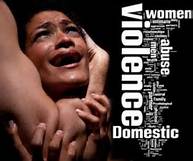
Intimate Partner Violence occurs in our homes. In the spaces where we should expect tender loving care. The use of alcohol and the attendant breaking of Ugandan and international laws,  vulnerabilities to HIV, child abuse, evictions from homes, hunger and exposure to elements are some of the consequences. For more: https://www.nap.edu/read/21756/chapter/3#14.

In a study by Iryna B. Zablotska and others (2007) titled: Alcohol Use, Intimate Partner Violence, Sexual Coercion and HIV among Women Aged 15–24 in Rakai, Uganda, it was revealed that physical violence, sexual coercion, alcohol use before sex was associated with a higher risk of physical violence/sexual coercion. Alcohol use in intimate circumstances may not only be a catalyst for IPV, but also may significantly increase the likelihood of HIV transmission. Previous studies in Uganda and elsewhere showed that alcohol use may be a risk factor for HIV because it disinhibits sexual risk-taking and is associated with unprotected sex (Zablotska et al.. 2006); Kalichman et al. 2007). Our previous study in the same Rakai cohort found a significantly higher risk of HIV among men and women who reported alcohol use before sex (Zablotska et a. 2006). Young women are disproportionately affected by HIV and are more exposed to physical and sexual violence, preventive interventions which focus on factors instigating IPV and consider interventions focused on changing male behaviors, particularly alcohol use will go a long way in addressing IPV. Innovative interventions are needed to work with partners of young women and with men in general, to challenge their norms and behaviors regarding alcohol use and IPV. For more: https://link.springer.com/article/10.1007/s10461-007-9333-5. 


According to the Uganda Demographic and Health Survey 2006, more than two thirds of Ugandan women experience violence from their partners. Sixty eight percent had been harassed or beaten by their partners during the 12 months preceding the survey. Methods used included beating, pushing, dragging, forced sex, arm twisting, threatening, insulting and choking. Rural women suffered more violence than urban women. Likewise, uneducated women suffered more than their educated colleagues. Structural, resource and wealth inequalities are also cited to be fueling vulnerabilities to intimate partner violence according to Emmanuelle G. Ogland and others (2014) in their study titled:

Let us join hands to address Intimate Partner Violence. Come and support our organization as we strive to take this message to the grassroots.



Sunday, June 25, 2017

Meet the CEO of Masaka KP HIV Prevention & Support Organization (MAHIPSO)

Interviewer: 
Briefly give us a background into what prompted you to form this organization? 

Joseph Ssemanda: 
Thank you so much. This organization has had so many starts and stops. I did have the idea and was about to share it with others, then something else came up. I have met several obstacles and procrastination. You know that thought that comes to one, that keeps making one to postpone. In 2015, I began something small with orphans as well as joining and working under different NGOs. The time I worked with them, I realized they had so many questions they needed to be answered. Later,  I got the energy and motivation to start this organization with the help of my friends. My friends and I discussed about location for quite some time until we chose Greater Masaka Region which covers: Masaka, Ssembabule, Kalangala, Rakai, Lwengo, Bukomansimbi and  Kalungu.


Interviewer: 
Why did you choose to start an organization like this one?

JS: 
MASAKA KP HIV Prevention & Support Organization (MAHIPSO)  is a local community based livelihood project which was founded in 2015. It was registered officially at the Masaka District Administration in 2017 after a period of formation of two years. Its purpose is to promote health and human Rights in what is known as Greater Masaka Area (GMA). We shall engage in supporting our beneficiaries to lead quality lives and be part of programmes fighting poverty. MAHIPSO was founded in Greater Masaka to serve as a resource center to enable younger people of all categories access materials that promote quality life. Masaka is about 120 miles away from the only major Ugandan city. We are aware this is a constraint since almost all trappings of life are found in Kampala.  But, in starting this organization,  we reasoned that being 120 miles away should not be  a reason not to have services catering to all categories of able bodied persons in the community.

I want to say more about this important point. I chose to start up the organization simply because I wanted to extend services to my people who live past the Lwera! Most organizations are concentrated in Kampala, Entebbe and Wakiso. Places like Greater Masaka Region have scanty NGOs. There are a lot of people who need services.  HIV is increasing at a high rate in Masaka. We have organizations like The AIDS Service Organization (TASO), Medical Research Council (MRC), Rakai Project, Villa-Maria, Kitovu, Masaka Regional Referral Hospital and other organizations. But, still when it comes to HIV they have concentrated on the traditional approaches. They assume all sexual intercourse has to take place among heterosexual married people above 18 years. But, there is more sexual intercourse going on outside marriage. When it comes to younger people, most health workers adopt a blaming and condescending attitude when providing care. This discourages many younger people to access services. This is one of the reasons why there are many unattended cases Sexually Transmitted Infections among younger people.A gap exists when it comes to younger people-friendly services.


I:
When dealing with HIV, you will also have to be conversant with the Rights-based approaches. How will you deal with a situation such as when a Transgender Person comes to seek services?

JS:
Thank you so much. All people who come to us for services will be given a dignified regard. At our place we adopted the Unconditional Positive Regard (UPR) value. Also, we work with other organizations. Whatever case we cannot handle is referred to those organizations. I want to re-emphasize this. Our organization will never discriminate according to: religion, race, creed, sexual orientation, age and status in life.


I: Briefly, tell us the main objectives please

JS:
The first objective is to  carry out comprehensive HIV/AIDS awareness and prevention campaigns or be the link to such services. Secondly, we want to build organizational capacity to effectively manage our affairs. Thirdly, we want to establish safe refuge transitory homes to house victims of hate campaigns, stigma and discrimination. Fourth, we are advocates for developmental rights too. So, you see, we are a rights-based approach implementers. 

I:
There are people who inspire others. In your case who are they?

JS:
Jesus Christ the Nazarene; My mother (Mrs. Nagaddya Annet Nsubuga) and my father; my friends...sotto voce.... (with whom we started this organization wherever they are I thank you all); Ssenyonyi John Kevin; and Pope Francis. These are the ones I have off-head.

I:
Briefly tell us about your  education background:

JS:
Thank you. I went to Masaka Citizen Primary School; Apostles of Jesus Seminary Bukinda in Kabale for my O'Level; then joined St. Jude SS Masaka for my A'levels. After my A' levels I did not join university because my parents could not afford it. But, I joined ICY an organization doing outreaches to communities. I worked with them for one year. After, I enrolled in a Music School called Esom Music College because of my passion in music and drama. I have not completed college but I have decided this should not stop me running this organization.  With this background, I am sure I am going to make my contribution to a better lively world.

I:
Normally interviewers ask for a last word. But, I feel that is an oxymoron which if analysed, means you are on a deathbed. So, I am not going to say it. Instead please, tell us something as we wind up this short interview

JS: 
I thank all of you at International Links. I am so happy you have someone who transcribes this interview and that you are ready to give it to me to share with my networks. I thank you so much for helping me to put into words what I think. To the readers please follow us on the different social media platforms. Also visit our resource center when we open it officially. Thank you to all of you.
Joseph Ssemanda
Chief Executive Officer  
Masaka KP HIV Prevention & Support Organization (MAHIPSO)