Tuesday, August 8, 2017

MAHIPSO End to Intimate Partner Violence (IPV) Drive August 2017 to December 2017


A few weeks back we brought you articles or blogs on violence in our homes or communities. We hope you took time to read through. In Greater Masaka which is comprised of: Rakai, Masaka, Kyotera, Kalungu, Bukomansimbi, Lwengo, Ssembabule and Kalangala) early marriages and alcohol abuse are some of the factors fueling IPV.


James is a coffee buyer in Nninzi, kyotera district. He is 27yrs and currently has three wives in three separate villages. Two of them complained to their friends that James assaults them every time he is drunk. He often blames them of stealing from him and ends up beating them. Jacinta (21yr old, wife No 2 had a miscarriage) when she told her own parents about it, they asked her to go back to her husband. They told her that is what being being a faithful wife entails! Jacinta had to go back to her husband since her own family had sided with the husband. They condoned the harsh treatment and beatings she faced. Unfortunately most people in different communities receive such responses when they try to speak up about IPV.


Causes of Intimate Partner Violence are rarely reported because of the stigma associated with being abused.


IPV is a domestic violence by a spouse or partner in an intimate relationship against the other spouse or partner.


IPV can take a number of forms including physical, verbal, emotional, economic and sexual abuse.


IPV could be blamed on one's childhood but it is not justifiable. If a man beats up a woman(physical abuse) and the women were expected to financially depend on men(often leading to financial abuse) perpetrators of IPV tend to feel the need to control their partner because of low self esteem and failure to control one's feelings, alcoholism, financial dependency and peer influence among other issues.


Victims of IPV should know that they are not alone and that they don't deserve to be abused.


At MAHIPSO, we are collecting data on IPV in Greater Masaka Region and according to our Action plan, we shall engage different community based Dev't officers, the law and community leaders to increase awareness on how abuses can be perpetrated. For instance, people should know that putting hands on another person without consent is assault ! ,People should know that partners should not be beaten just because they didn't iron or wash a given shirt well. 


IPV is an important issue we need to tackle in Greater Masaka Region.This issue is also very central to our understanding of sexuality and power roles in our communities.


Couples should negotiate when and how to have sex. This is called negotiated sex agreements. just because there is flirting, it may not be construed as permission to have sex. partners or spouses should know each other and should treat breaks which renew intimacy. this can be in form of buying each other presents or eating out and verbal apologies.


Communities should come up with anti IPV committees. victims should immediately call on these committees. for our region this is a 24hr intimate partner violence support system. 

MAHIPSO CEO has put up a number to call (+256755711264) and we shall work in partnership with the leaders and security committees to say no to all forms of IPV. All calls are confidential and we guarantee immediate response.


We want to state categorically that we do not discriminate anyone based on orientation, status or standing in community.


We offer support and information to friends, family members and those who seek for our services.


Our aim is to make every person aware of the options so that you can make informed choices as regards IPV.


Who can call us? Anyone experiencing IPV, friends, family and acquaintances of those experiencing IPV and would like to get them professional help.


Friday, August 4, 2017

Greater Masaka Regional Teenage suicides, Intimate Partner Violence, Unplanned Pregnancies & Interventions in t he news!

We bring you a vignette of happenings and events that are dear to us and core activities that we shall deal with in our organization. We took time to do research on the issues of teenage pregnancies, intimate partner violence, suicides and interventions in Greater Masaka Region. The idea of this short project was to gauge what happens and the readiness of our communities to break certain destructive cycles, to encourage the participation of men, women, boys and girls in health preserving and seeking practices . Read for yourselves:


Women's Day Special: Teenage Mother Expecting Fifth Child at 20 Years

This was a story that caught headlines in Bukomansimbi. At just 20 years, Nabuuma Lamula, a Bukomansimbi teenage mother who started giving birth at 13 years is now expecting her fifth child.

This story combines aspect of intimate partner violence, mobility, survival networks and unplanned pregnancies.

Nabuuma is a resident of Bukomansimbi town council in Bukomansimbi district. She is a primary four dropout.  She says she had her first child at 13 years although the baby died two weeks after birth.

Nabuuma however had three more babies later after with Moses Ssenkindu, a resident of Nyendo in Masaka Municipality. Nabuuma and Ssenkindu however broke up in 2012 over domestic violence. She claims that in addition to battering her almost every day, Ssenkindu did not provide basic necessities for their children.

 Nabuuma is now married to Julius Kasagga, a resident of Bukomansimbi district and is expecting his first child. She says in all the other pregnancies, she had been depending on traditional birth attendants (TBA). She says TBAs gave her local herbs throughout the pregnancies and they also helped her give birth.

For More: https://ugandaradionetwork.com/story/womens-day-special-teenage-mother-expecting-fifth-child-at-20-years.


Woman Commits Suicide Three Weeks After Seeking Treatment

Suicide is another issue we hope to talk about a lot as part of our message giving during all our outreaches. There are many stories we get of men, women, boys and girls who committed suicide. These two stories are around the subject of community readiness to tackle emerging suicide epidemics, HIV and social stigma.


Pauline Mugaga was found hanging on a tree, three weeks after she sought treatment for mental disorder and was discharged.
Police in Masaka are investigating circumstances under which a 47-year old woman hung herself.

The Kindu village housewife was found hanging on a tree near her house.

Pauline Nakayima Mugaga's husband Charles Mugaga says that she left him in their marital bed at 7:00am. Mugaga says he thought his wife was going to ease herself.

He became concerned when Pauline did not return for a long time or reply to his calls.

On failing to find her, he mobilised neighbours,residents and the village authorities who launched a thorough search for the missing woman.

The Kindu village chairperson Ronald Kizito confirms that Pauline was found hanging on a tree near the couple's house. She was already dead.

Kizito says Pauline's suicide has shocked the village because she was a well loved member of the community who was considered to be a kind woman.

Peter Alikazana, the Kyanamuka Police post in-charge, says suicides are very rare in Kyantale parish where Kindu village is located.

Alikazana says police has programmes to meet with the community and encourage it to consider counselling whenever faced with difficulties.

Mugaga says his wife had received treatment at Masaka regional referral hospital three weeks earlier for mental disorder. He thought she had made a full recovery.

Nakayima’s body has been taken to Masaka referral hospital for postmortem.

This is the second recorded suicide case in under a month in the district.

A Lwengo district native Jane Nakavuma (34) committed suicide at the regional referral hospital where she had come to seek treatment. She hung herself on a tree in the hospital compound after she learned she had tested HIV positive.


Nabagereka Foundation Out to Curb Teenage Pregnancy

Since 2014, there have been efforts to curb teenage pregnancies. We captured this story by the Nabagereka Foundation. Solome Nakaweesi Kimbugwe, the Foundation’s Chief Executive Officer says the campaign comes at a backdrop of an increase in teenage pregnancies across Ugandan communities.

The Nabagereka Development Foundation, a Non-Government Organization founded by the Queen of Buganda, Sylvia Nagginda has initiated a rigorous advocacy campaign against teenage pregnancies in the greater Masaka region.

Salome Nakaweesi Kimbugwe, the Foundation’s Chief Executive Officer says the campaign comes at a backdrop of  an increase in teenage pregnancies across Ugandan communities.

The Uganda Demographic Health survey 2011 recorded that about 14 per cent of young women and 16 per cent of young men had their first sexual encounter before the age of 15 while 57 per cent of young women had their first encounter before the age of 18.

According to the Population secretariat, of the 1.2 million pregnancies recorded in Uganda annually, 25 percent are teenage pregnancies. The more than 300,000 teenagers who get pregnant annually also account for the bulk of unwanted pregnancies, which end up in unintended births or abortion.

Based on such alarming figures, Nakaweesi told a dialogue on Sexual and Reproductive Health Education and Rights in Masaka that the figures have stagnated for years despite several interventions to save teenagers from the crisis. She added that Masaka is listed top among the worst hit areas.

Nakaweesi explains that the area has a number of dynamics leading to the persistence of the problem. They include among others, early marriage, early initiation of sex and lack of information among the youth. The Nabagereka foundation will therefore focus its efforts on equipping the youth on how to overcome the challenges driving the problem.

For more: ttps://ugandaradionetwork.com/story/nabagereka-foundation-out-to-curb-teenage-pregnancy.


MOH Launches Campaign to Fight Teenage Pregnancies

In Uganda, 24 percent of maternal deaths in Uganda are a result of teenage pregnancies, which are a threat to national development. Defilement is one of the causes of these pregnancies.  Sarah Opendi, the State Minister for Primary Health  is convinced that defilement is the major cause of teenage pregnancies. Opendi emphasizes the need for collective efforts from the communities and the police to ensure no defilement case is settled out of court. notes that the primary cause of teenage pregnancy is unprotected sexual intercourse.

The health ministry has launched a campaign dubbed “Let girls be girls” aimed at reducing maternal deaths by 15 percent by July 2015. The Let Girls be Girls campaign shall cost 2.2 billion shillings for a full year.    Currently, 24 percent of maternal deaths in Uganda are a result of teenage pregnancies, which are a threat to national development.

Teenage pregnancies implies that the individual is carrying a baby while she is still a baby herself or under 18 and is prone to experiencing many risks that endanger her health and that of her unborn baby. Sarah Opendi, the State Minister for Primary Health notes that the primary cause of teenage pregnancy is unprotected sexual intercourse.

The unwanted and unplanned pregnancies result into complications such as difficult delivery, high blood pressure, fistula and low weight babies amongst other others.


Sunday, July 30, 2017

Resources Needed For Planning Successful Meetings

Resources needed for successful meetings are: 

Staffing
Registration desk
All staff should be up front to greet attendees and build or manage relationships
Lead facilitators and breakout group facilitators
Handlers for cordless microphones
Recorders for flip charts or graphic recorders
Note-takers
A/V assistance, videographers
Technical staff to give presentations
Set up and break down of furniture and equipment
Interpreters, if necessary

Materials
Venue reservation with appropriate space and furniture
Registration desk, forms, nametags
Refreshments appropriate to time, effort and audience
Data projectors, laptops, screens
Flipcharts, tape, and markers
Sound system with cordless microphones
Presentations, posters, fact sheets, agendas
Video
Props for working in groups (pens, paper, pins, etc.)
Evaluation forms, comment forms
Child care

Planning Time
Effective meetings take months to plan and implement
Begin advertising at least one month in advance

Implementation Time
Meetings generally last from one to four hours
Arrive at least two hours ahead to ensure all set up is complete prior to early arrivals

Group Size
Meetings can be designed to meet virtually any size audience
For larger meetings, consider some portion of the meeting which allows for smaller group dialogue

Cost
Simple public meetings can be done with minimal cost
The major cost driver is staff time

Additional significant costs can include venue rental, advertising, and neutral facilitation support


Principles for Successful Planning

We bring you tips for successful planning: 

Establish why you need to hold a public meeting and design your meeting to meet these specific needs. Do not hold a meeting to simply meet a regulatory requirement; this wastes people’s time, and may create disinterest for future involvement
Consider a series of meetings, rather than a single event. If you try to do too much in a single meeting, you will achieve little as people will not be able to understand the full range of information you are trying to provide. Instead, consider the learning and deliberation journey required to solve the problem and identify strategic meeting points throughout the overall public participation process
Publicize and advertise the meeting broadly. Make sure to put information in places where stakeholders go for their community information. Reach out directly to the range of interests who should be in attendance and extend personal invitations
In all advertising, clearly state the goal of the meeting, how it will work, and why stakeholders should attend. State the beginning and end times but avoid providing information about smaller time segments
Public meetings are often a focal point for media interest. Invite media and provide them with specific information that will help them to cover the meeting accurately
Take photos to provide a record of the event
Videos of the presentations can be produced to stream on the web and provide a resource to those who could not attend
Produce a clear summary of the meeting and distribute widely
Book a venue that allows for flexibility as to numbers of attendees
Venue should be located directly in the affected community if possible, or in a neutral area if not
Provide refreshments
Conduct the meeting at a time that is most convenient for the community
Make arrangements for people with disabilities or with language interpretation needs
Arrive and set up early
Test all equipment and arrange seating to maximize interaction of participants
Greet everyone as they arrive and make them feel welcome
Ask participants to agree to ground rules or behavioral guidelines at the beginning of the meeting
Present the agenda and explain the purpose of the meeting, how it will work, expected outcomes, and how/where it fits into the overall public participation process
Facilitation is essential
Make sure to create a safe and secure environment for all voices to be heard and to avoid allowing the meeting to be taken over by vocal community members
Be flexible; issues may arise that can change the agenda or ability to address certain issues

Record all input and comments; summarize what you have heard at the end of the meeting and let participants know what you will do with their input and what to expect next in the process, especially opportunities for ongoing participation.


Public Meetings

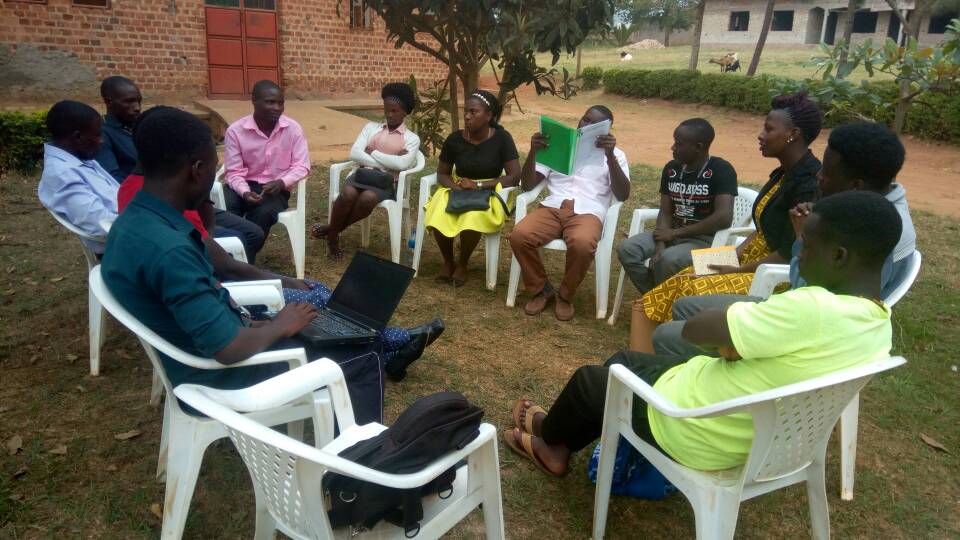
Public meetings bring diverse groups of stakeholders together for a specific purpose. Public meetings are held to engage a wide audience in information sharing and discussion. They can be used to increase awareness of an issue or proposal, and can be a starting point for, or an ongoing means of engaging, further public involvement. When done well, they help build a feeling of community.

Meetings can be virtually any size and can be used for any purpose from providing information up to consensus building. Public meetings are familiar, established ways for people to come together to express their opinions, hear a public speaker or proposed plan, engage in shared learning about a topic, or work together to develop solutions. Public meetings do not have to follow any specific script or agenda. They can be designed to meet the specific needs of the project, agency, and stakeholders. The main advantage of public meetings is the ability for stakeholders to listen to and talk to each other, not just the agency.

While most public meetings are larger and are intended to attract the full range of stakeholders in a community, smaller public meetings can also be held with like-minded stakeholders. Focus groups or dialogue meetings can be made up of people with common concerns who may not feel confident speaking up in a larger public gathering (e.g. women, those who speak English as a second language, indigenous groups). By creating a safe venue, these people can speak comfortably together, share common issues and a common purpose. The findings from smaller meetings can be presented at larger public meetings or in summary reports, giving a “voice” to those in the community who are unable to speak up in a larger setting.

Advantages
Introduces a project or issue to a community
Provides all participants a chance to voice their concerns, issues, and ideas
Disseminates detailed information and decisions throughout the community
Provides opportunities for exploring alternative strategies and building consensus
Can create consensus for action on complex issues that require broad-based community input

Challenges to Consider
Unless carefully planned and well facilitated, those perceived as having the most power within the community, or those who are most articulate and domineering in their verbal style can dominate the meeting and overwhelm the ability of other voices to be heard
Even when well attended, meetings will only reach a very small segment of the community that require information and whose input could be extremely valuable in crafting solutions
Participants may not come from a broad enough range of interests to represent the entire community, providing a skewed view of what the public really thinks
Unless well designed and facilitated, conflicts may be deepened rather than explored and potentially resolved
Community members may not be willing to work together


Thursday, July 27, 2017

MAHIPSO Uses Integrated Community Mobilization Approaches to Increase Community Participation in HIV Prevention Activities


MAHIPSO uses tried and tested measures at community-level to increase participation by beneficiaries in interventions that address their needs. 

Over time we have realized that community mobilization is so many things that add up to make the event a success. We also know that community mobilization is continuous and involves so many participants called players or stakeholders. 

It is this very principle that makes us use identified community venues to enable people donate blood and at the same time be introduced to HIV prevention. We use the community-based mobile voluntary counseling, testing and post-test support services to increase opportunities for conversations, change attitudes, increase knowledge  and altering community norms to reduce the incidence of HIV in Greater Masaka Region. 

Seven major community mobilization strategies are used: 

1. key-stakeholder buy-in
2. formation of community coalitions
3. community engagement
4. community participation
5. raising community awareness
6. involvement of leaders
7. partnership building. 

We hope to build on this collective advocacy and organization to foster HIV awareness and prevention; crime prevention;  increase uptake of VCT, stimulate discussions about HIV, reduce stigma, and ultimately decrease HIV incidence in Greater Masaka Region. 

For those interested in reading more about Community Mobilization: